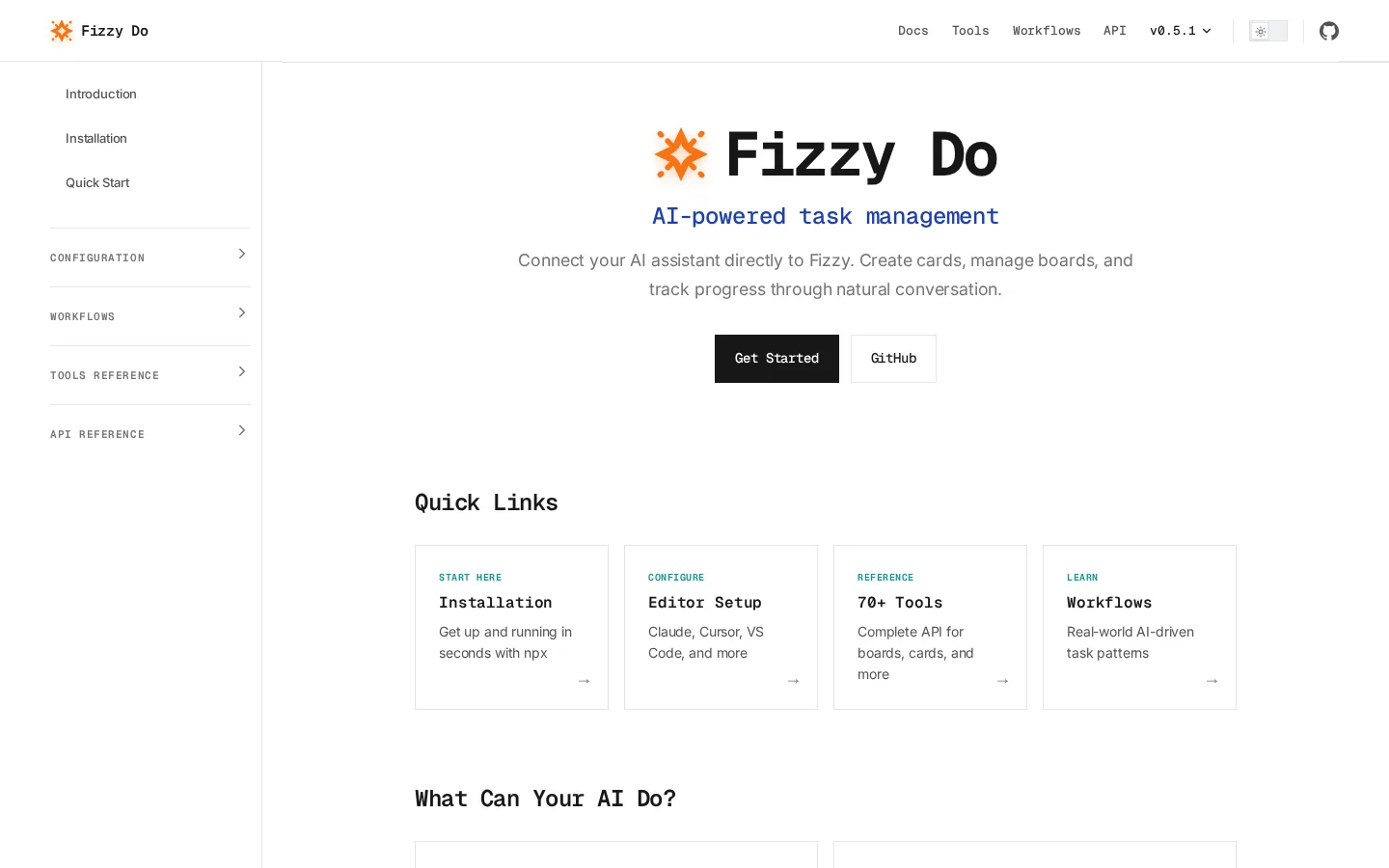
The problem
Most MCP servers are thin wrappers that pass one API call through at a time. Managing a board from chat needs more: setup that works in every editor, errors an agent can act on, and tools that read across many cards to answer questions like what changed since yesterday.
Who it is for
Fizzy users who want their assistant to read and update their boards, and anyone building an MCP server for a real product API who wants a complete example to copy.
What you will learn
- Cover a whole product API as MCP tools, grouped by area, from boards and cards to reactions and webhooks.
- Build a typed API client with retries and a Result type, so every failure comes back as a value the tool can explain.
- Write tools that combine many API calls into one answer: actionable cards, project context and standup-style progress reports.
- Ship a CLI with a setup wizard that finds the editors you have installed and writes their MCP config for you.
- Publish a pnpm monorepo to npm with Changesets, with docs on VitePress.
The AI parts
- The Model Context Protocol TypeScript SDK, over stdio.
- Works with Claude Desktop, Claude Code, Cursor, Windsurf, Continue and OpenCode.
- Five project manager tools that let an agent start a work session, pick up actionable cards and report progress.
- MCP
- TypeScript
- Node.js
- pnpm
- Changesets
- VitePress
Open these first
- 01
AGENTS.mdHow the repo is laid out and how to work in it. - 02
packages/tools/src/register.tsEvery tool group and how they are registered. - 03
packages/tools/src/cards/tools.tsThe 18 card tools, the biggest group. - 04
packages/tools/src/project-manager/tools.tsTools that read across boards to build context and standups. - 05
packages/client/src/client.tsThe typed Fizzy client with retries. - 06
packages/shared/src/result.tsThe Result type behind every error. - 07
apps/server/src/configure/agents.tsHow the wizard finds and configures each editor.
Run it
npx fizzy-do-mcp configurepnpm installpnpm buildpnpm testHonest status
Live
Published on npm as fizzy-do-mcp, version 0.5.1, with full docs at fizzy.yogan.dev. MIT licensed. You need a Fizzy personal access token.